包丁
ほうちょう · houchou · JLPT N2 · noun
knife
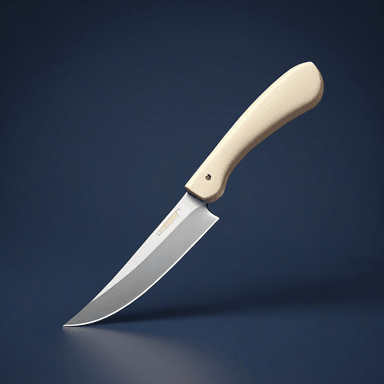
🔪 Etymology: 庖 (kitchen) + 丁 (cook), after the cook Ding in the Zhuangzi
Modern 包丁 is written with 包 (wrap), but it derives from 庖丁, where 庖 means kitchen. Ding was a legendary cook in the Zhuangzi who carved oxen flawlessly.
包 — 勹 wrap + 巳 fetus
包 is a pictograph showing a fetus (巳) wrapped inside a womb (勹, an enclosing shape). The original sense was 'to wrap' or 'enclose,' and it later extended to mean a bundle, package, or bag. It also serves as a phonetic component in many characters like 抱, 泡, and 饱.
丁 — single stroke pictograph, originally a nail
丁 is a pictograph of a nail viewed from above or the side, showing the head and shaft. Its original meaning was 'nail,' later extended to 'sturdy adult male,' then to general senses like 'individual person' or 'fourth' in ordinal lists. The 'nail' meaning is now written 釘.