自行车
zìxíngchē · HSK 2
bicycle
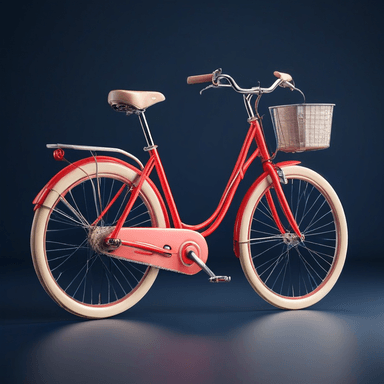
🚲 自行车 = self + go + vehicle (a self-propelled vehicle)
Compound of 自 (self), 行 (go/travel), and 车 (vehicle/cart). Literally a self-going vehicle — you power it yourself, unlike a 汽车 (steam/gas vehicle = car).
自 — pictograph of a nose
自 originally depicted a human nose, shown frontally with the bridge and nostrils. Ancient Chinese pointed to their own nose to mean 'me,' so 自 shifted to mean 'self' or 'oneself.' A new character 鼻 was later created to carry the original 'nose' meaning.
行 — crossroads pictograph (left 彳 + right 亍)
行 originally pictured a four-way crossroads in oracle bone script, with two paths meeting. From 'road' it extended to 'walk, go, travel,' and then to 'a row, line' or 'business firm' (read háng). The two halves 彳 and 亍 are the split sides of that ancient crossroads.
车 — pictograph of a chariot/cart
车 is a pictograph originally drawn as a top-down view of a chariot, showing the axle, wheels, and carriage box. The ancient form 車 clearly depicted two wheels connected by an axle. It still means vehicle, cart, or car today.