盘子
pánzi · HSK 4
tray
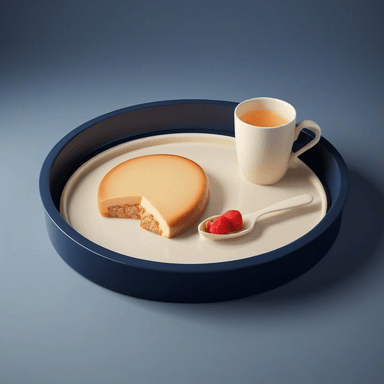
🍽️ 盘 (plate) + 子 (noun suffix) = plate-thing
盘 means tray or plate; 子 is a common noun suffix turning roots into everyday objects (like 桌子 table, 椅子 chair). So 盘子 literally reads as plate-thing, the generic word for a dish or shallow bowl.
盘 — 舟 boat (phonetic) + 皿 dish (meaning)
Originally written 槃 with 木 wood, depicting a wooden tray or basin. The modern form 盘 keeps 皿 (dish/vessel) as the meaning component and uses 舟 as a phonetic hint. From 'flat tray' it extended to 'plate,' 'coil/wind around,' and 'examine.'
子 — pictograph of a baby/child with arms out
子 began as a pictograph of a swaddled infant with a large head and outstretched arms, originally meaning 'baby' or 'child.' From there it broadened to 'son,' 'offspring,' and a respectful suffix for masters like 孔子 (Confucius). It also became one of the twelve earthly branches.