栏杆
lán gān · HSK 7
railing
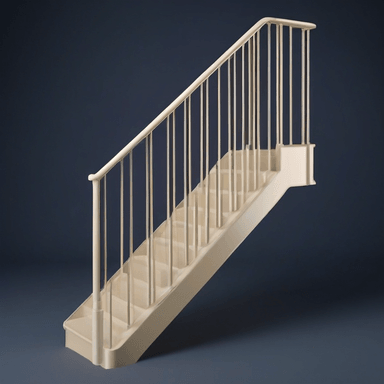
栏 fence + 杆 pole = the pole-fence you grip on stairs: a railing
Both characters share the 木 wood radical, marking them as wooden structures. 栏 means a barrier or fence and 杆 means a pole or rod, so 栏杆 is the fence-of-poles you hold onto along stairs or balconies.
栏 — wood radical 木 + 兰 (lán, phonetic)
A semantic-phonetic compound: 木 ('wood') signals the meaning, while 兰 (lán) supplies the sound. Originally written 欄 in traditional form, it referred to wooden railings or fences, and by extension came to mean a column or bordered section, as in a newspaper column.
杆 — wood 木 + dry 干 (phonetic)
杆 is a phono-semantic compound: 木 (tree/wood) gives the meaning of a wooden shaft or pole, while 干 supplies the sound. Originally referring to a slender wooden rod, it now denotes poles, shafts, and rod-like objects (gān), or stems and handles like a gun barrel (gǎn).