杆
gān , gǎn · HSK 6
pole
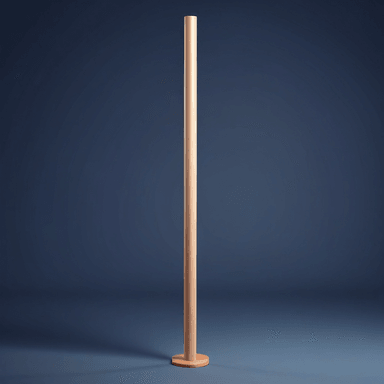
🪵 木 wood + 干 dry/trunk = a dry wooden shaft, i.e. a pole
杆 decomposes into 木 (wood) on the left and 干 (dry, also a trunk/stem shape) on the right. The wood radical marks it as a wooden object; 干 supplies both the sound (gān) and the trunk-like meaning of a long straight shaft.
杆 — wood 木 + dry 干 (phonetic)
杆 is a phono-semantic compound: 木 (tree/wood) gives the meaning of a wooden shaft or pole, while 干 supplies the sound. Originally referring to a slender wooden rod, it now denotes poles, shafts, and rod-like objects (gān), or stems and handles like a gun barrel (gǎn).